China Is Building a Stock Market for AI Chips, and US Export Controls Helped Fund It
Washington's curbs on Nvidia created captive demand for homegrown silicon, and Chinese investors have repriced the entire sector. The profits are real but thin, and the valuations are not.
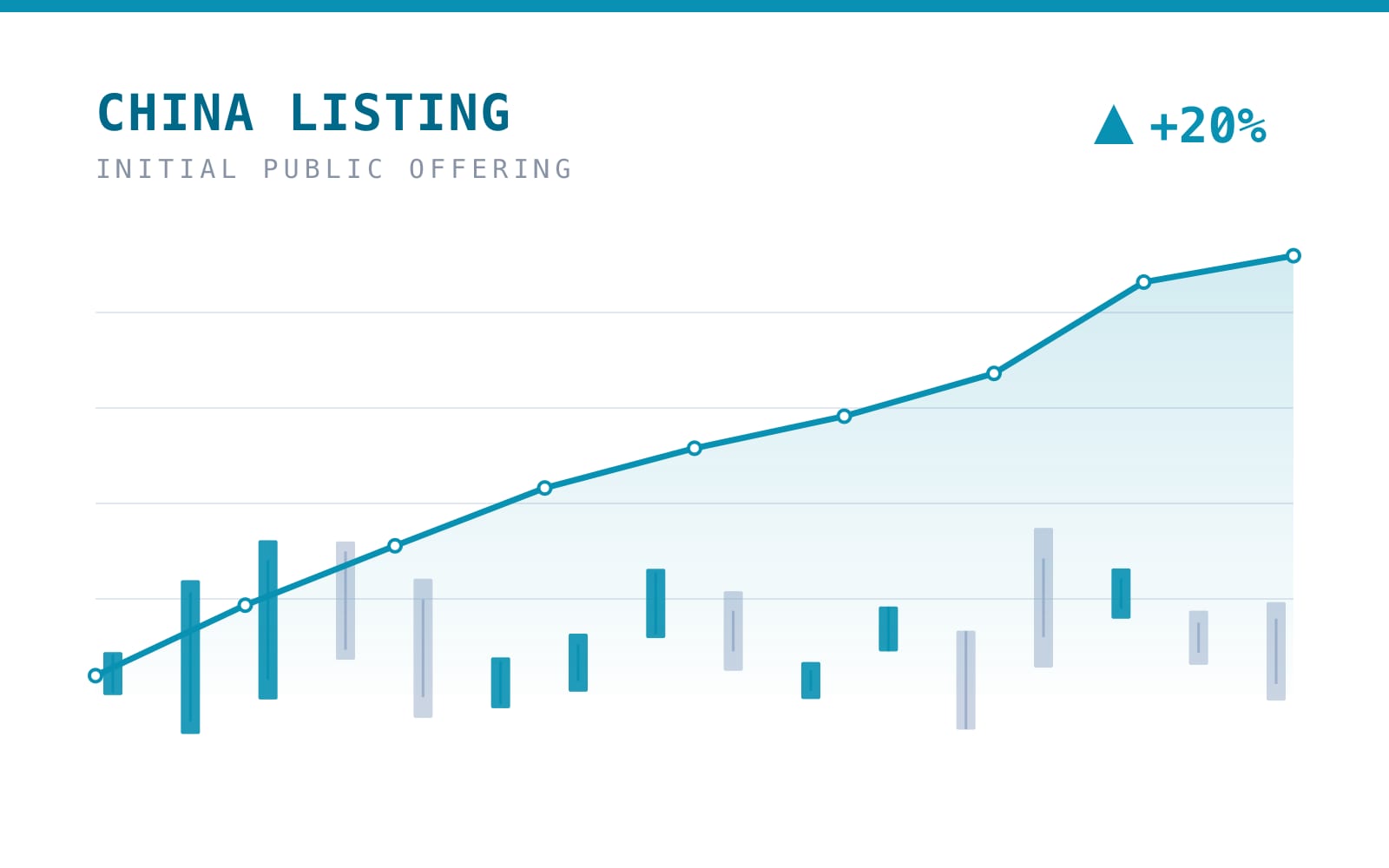
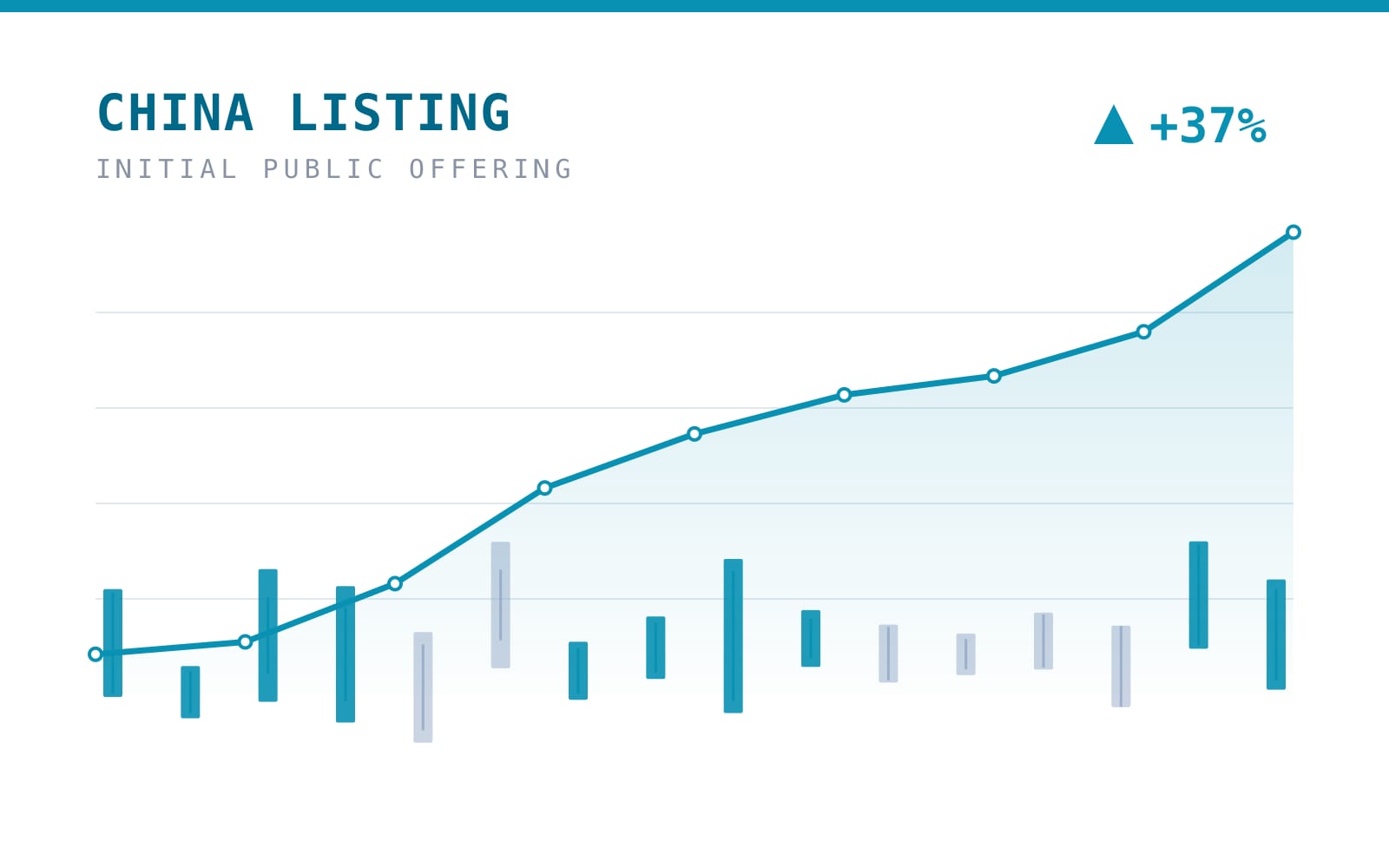
China now has something it lacked three years ago: a deep, liquid public market for companies that design artificial-intelligence chips. The clearest sign came in December 2025, when GPU startup Moore Threads jumped 468% on its first trading day on Shanghai’s STAR Market, the venue’s largest listing of the year, and rival MetaX surged almost 700% on its debut days later, according to CNBC. The buying frenzy did not come from nowhere. It is the direct result of US export controls that cut Chinese buyers off from Nvidia’s most capable chips and handed domestic designers a captive home market. The open question for investors is whether the profits now arriving can ever justify the prices being paid.
How export controls created the demand
The catalyst is policy, not just engineering. After the Trump administration prohibited exports of Nvidia’s China-specific H20 accelerator in April 2025, then reapproved sales four months later in exchange for a 15% export fee, Beijing responded by discouraging the chips entirely and pushing local firms toward Huawei’s Ascend line and other domestic parts, per International Banker. The scale of the gap this opened is large. Nvidia sold roughly one million H20s into China in 2024, while Huawei shipped only about 200,000 Ascend units that year, the same report notes. That shortfall is what every listed Chinese chip designer is now racing to fill, and what investors are pricing in.
This is the supply side of a story whose demand side resembles the reopening of the US IPO market in 2026, where AI exposure became the single trait that moved valuations. In China the dynamic is sharper because the customer base is, for now, walled off from the global leader.
Cambricon: the profit milestone, and the price
The bellwether is Cambricon, which listed on the STAR Market in July 2020 and spent years losing money. That changed in 2025. The company reported full-year operating revenue of RMB 6.5 billion, up about 453% year on year, and net profit of RMB 2.06 billion, up roughly 555%, its first profitable annual report, Futu News reported. On August 28, 2025, Cambricon briefly overtook Kweichow Moutai to become the most expensive stock in China by share price, EBC Financial Group noted.
The valuation is where caution sets in. Cambricon’s market capitalization sat near $128 billion as of May 2026, on a normalized price-to-earnings ratio above 190 and a price-to-sales ratio near 95, according to data compiled by AInvest. The same analysis flags a heavy concentration risk: a large majority of revenue is tied to a single customer, and the company depends on domestic foundries that lack the most advanced manufacturing nodes. Those figures are point-in-time snapshots and move quickly, so treat the precise multiples as indicative rather than fixed.
The 2025 listing wave
Cambricon proved a Chinese AI-chip company could go public and eventually earn money. The 2025 cohort tested how much investors would pay for the promise before the profits arrive. Moore Threads, founded in 2020 by a former head of Nvidia’s China operations, raised about $1.1 billion and opened near CNY 650 a share, Jon Peddie Research reported. MetaX, started by a former AMD executive, raised close to $600 million, per CNBC. Both were then slated for addition to the STAR Market 50 Index, which channels passive money toward newly included names.
The appetite spilled into Hong Kong as well, where the broader China tech IPO revival has been concentrated. Autonomous-driving chip designer Horizon Robotics raised $696 million in October 2024 in what was then Hong Kong’s largest IPO of the year, valuing the company at about HK$53.4 billion, The Robot Report wrote. Earlier that year, Xiaomi-backed Black Sesame Technologies raised roughly $133 million as the first specialist-tech listing under Hong Kong’s Chapter 18C rules, though its shares fell about 27% on day one, Caproasia reported.
The profitability question
Strip out the share-price moves and the underlying businesses are uneven. Cambricon is now profitable but extraordinarily concentrated. Moore Threads and MetaX command tens of billions of dollars in implied value while still building out revenue, and Black Sesame’s flat debut shows the enthusiasm is not uniform. The hardware gap with the US is also real: Huawei’s roadmap does not put a part competitive with Nvidia’s H200 into production until late 2027 at the earliest, per the techradar account of its chip launches. That gap means Chinese designers are selling into demand they cannot yet fully serve at the high end, which supports volumes but caps the premium they can charge.
This is the same tension running through Western AI-chip listings such as Cerebras and its push into the public market: real revenue growth, real strategic importance, and valuations that assume the growth never slows.
The bubble risk
The strongest argument for caution is that the rally is policy-driven. Demand was manufactured by export controls, and index inclusion has amplified it with passive flows that buy regardless of fundamentals. Analysts cited by AInvest have warned that Cambricon’s price “deviates from fundamentals,” with some discounted-cash-flow models implying extreme overvaluation. Those are model outputs, not facts, and should be read as one bearish view among several. Still, the pattern is familiar: a genuine industrial shift, a wall of capital with few alternatives, and prices that have run ahead of earnings. If Washington loosened controls, or if a domestic foundry stumbled, the repricing could be sharp. For now, the captive market keeps the demand intact, which is exactly why the stocks keep climbing.
FAQ
Why are Chinese AI-chip stocks surging?
US restrictions on Nvidia’s H20 chip cut Chinese buyers off from the global leader and pushed them toward domestic alternatives. That created captive demand for companies like Cambricon, Moore Threads and MetaX, and investors have repriced the sector aggressively, with several 2025 STAR Market debuts gaining 400% to 700% on day one.
Is Cambricon actually profitable?
Yes, as of its 2025 results. Cambricon reported its first profitable full year, with net profit of about RMB 2.06 billion on revenue of RMB 6.5 billion. The concern is valuation, not losses: its price-to-earnings ratio has run well above 190, and a large share of revenue reportedly comes from a single customer.
Could this be a bubble?
It carries clear bubble characteristics. The demand is policy-created, index inclusion has added passive buying, and valuations sit far above current earnings. Several analysts argue prices have detached from fundamentals, though views differ and the captive home market keeps demand strong for now.
Sources
- CNBC — MetaX and Moore Threads are latest Chinese rivals to Nvidia’s AI chips
- Jon Peddie Research — Moore Threads files IPO, raises $1.1 billion
- Futu News — Net profit surges 555%: Cambricon’s annual report
- EBC Financial Group — Cambricon stock price skyrockets 130% in August
- AInvest — Cambricon’s volatile rise: overvalued amid sanctions and market exuberance
- The Robot Report — Horizon Robotics raises $696M in Hong Kong’s biggest IPO of 2024
- Caproasia — Black Sesame Technologies IPO on Hong Kong Exchange
- International Banker — Why China has banned domestic firms from buying Nvidia’s AI chips
- TechRadar — Huawei launches its fastest AI chip as US bans Nvidia H20
china ai-chips semiconductors cambricon moore-threads ipo export-controls star-market